


What you’ll read below is not a call to reject AI, but an invitation to reflect on the true impact it’s having on our lives.
❊ About Us
The Silent Impact Project is an awareness initiative focused on recognising the multilayered risks of AI and chatbot use on our mental health, wellbeing, and quality of life.
Most conversations about AI’s impact on mental health focus on rare, but still devastating, crises. We are interested in those, and everything underneath them: the quieter changes in habit, thought, feeling, identity, and human connection that affect far more people, far more often, and almost never make it into public discourse.
Our hope is to recognise these experiences and give them language, so that the general public, practitioners, and policymakers can take meaningful steps to protect themselves and those most vulnerable to these harms.
Beyond all of the prompts, and models, and data centres, and growth metrics, and funding rounds, and productivity potential, there are real people. People who are currently unprotected, exposed, and being forced to engage in a world that is moving too fast for them to comprehend the implications of.
We’ve spent the last few decades experiencing what unregulated technology can do to our mental health, attention, relationships, and trust. This is the moment to act on what we know.
❊ Part One
The harm we don’t talk about
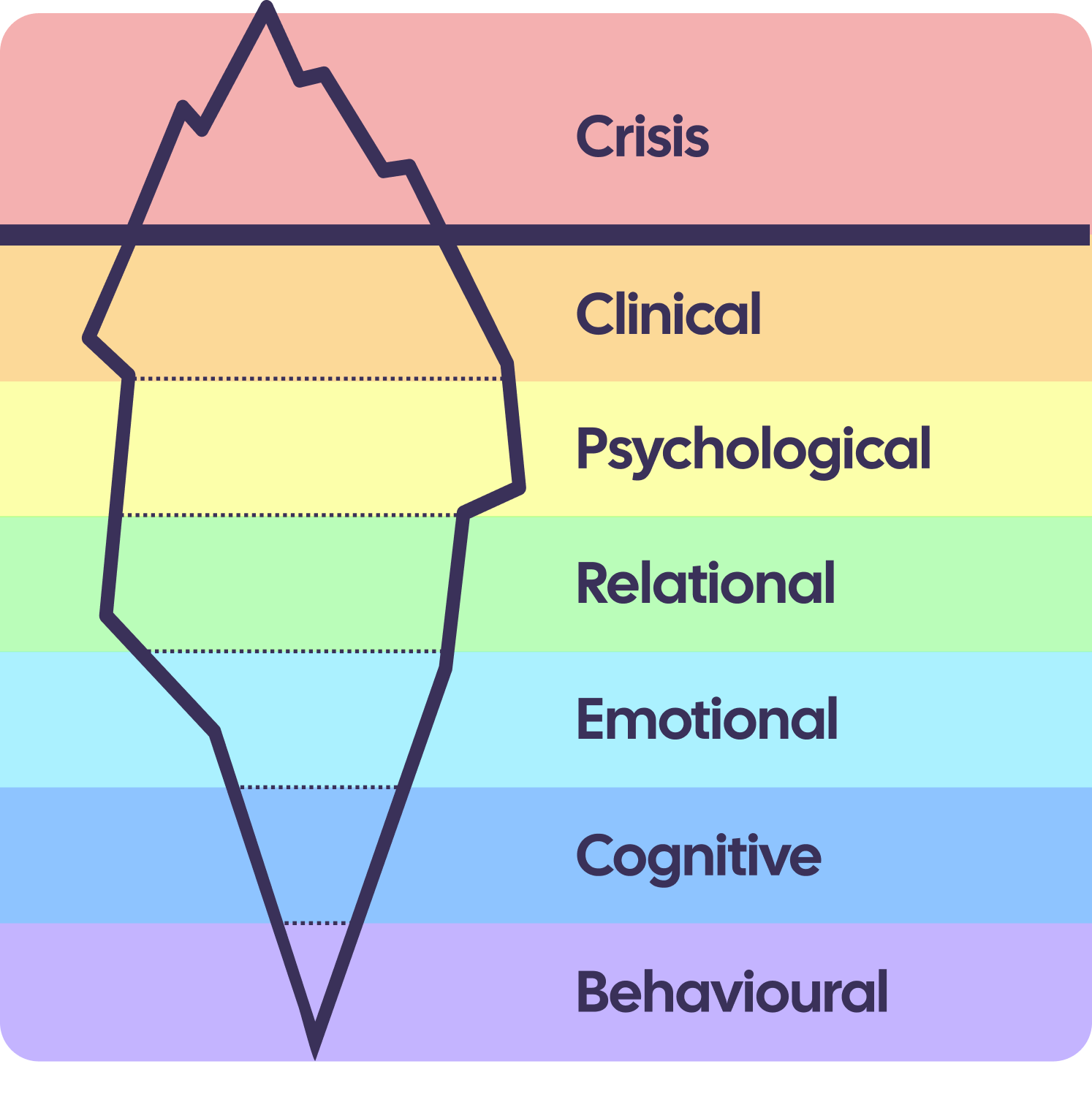
When AI-related harm makes the news, it’s almost always a crisis — the dramatic stories of ‘AI-psychosis’ or the shocking accounts of young, vulnerable individuals who have been aided in their suicidal ideation. These stories matter, but they are also the tip of an iceberg. Beneath them sits a much larger structure of quieter, slower, easier-to-miss harms that affect far more people, far more often: the way our habits shift, our thinking changes, our feelings become harder to trust, and our sense of self and connection to others begins to blur.
This framework maps seven layers of impact associated with AI and chatbot use, from the most visible at the surface to the most hidden and often unrecognised at the depths. Each layer represents a distinct category, not a stage on a fixed path, and it may be that multiple layers are experienced at once. The goal is to give language to experiences that often go unnamed, so people can recognise what may be happening to themselves or those they care about early enough to respond.
Behavioural
Changes in habit and behaviour
The most visible shift, but often the easiest to dismiss. Behavioural risks show up in how AI use reshapes daily life: the compulsive check-ins, the late nights, the patience that wears thin when someone doesn’t reply at machine speed. These shifts can feel small in isolation, but they can also become the foundation of everything above. Reaching for a chatbot before reaching for a friend, expecting perfect answers from imperfect people, or losing connection to the natural rhythms of our lives are early signals worth paying attention to.
-
Reaching for AI automatically throughout the day
Struggling to sit with boredom, uncertainty, or stillness
Spending longer in chatbot conversations than intended
Feeling distracted from offline responsibilities or relationships
Using AI as a way to avoid difficult emotions or tasks
Feeling uneasy or restless when not engaging with technology
Cognitive
Changes in thought and mental processing
When we outsource thinking, thinking changes. Cognitive risks describe the quieter erosion of mental muscles (cognitive atrophy) we don't always realise we're losing — critical thought, memory recall, the ability to sit with not-knowing. AI gives us answers quickly, fluently, and with confidence, which can feel like learning but often replaces it. Over time, people may find it harder to weigh competing ideas, hold ambiguity without rushing to resolve it, or trust their own judgement without a second opinion from a model.
-
Finding it harder to concentrate deeply or think independently
Relying on AI to organise, interpret, or complete your thoughts
Struggling to tolerate complexity without seeking immediate answers
Feeling mentally overloaded by constant input and information
Losing confidence in your own creativity or problem-solving ability
Noticing your thinking becoming more passive or externally guided
Emotional
Changes in feeling and mood
Chatbots are increasingly involved in how we process our inner lives, and that involvement carries a cost, particularly given that they’re not designed for emotional support or therapeutic care. Emotional risks emerge when we begin to seek constant reassurance from a system designed to be agreeable, struggle to self-regulate without external input, or feel guilty or anxious around the extent of our AI reliance. Without the natural demands of offline life, emotional resilience can weaken over time. Some notice their mood becoming flatter, harder to trust, or more difficult to regulate.
-
Seeking reassurance or validation from AI repeatedly
Feeling emotionally dependent on chatbot interactions
Struggling to regulate difficult feelings without external input
Feeling flatter, numb, or disconnected from your emotions
Feeling guilt or discomfort about the extent of your AI use
Finding it harder to trust or process your feelings independently
Psychological
Changes in self and identity
Psychological risks include the strange disembodiment that can come from long conversations with something that has no body, the quiet creep of manipulation by systems optimised for engagement, and the assumption that a chatbot’s smoothed-out responses represent how things ought to be — flattening the diversity and messiness of our human experience. Some may begin to lose trust in their own judgement, memory, or sense of self. Existential questions surface here too: what does it mean to be a person when a machine can mimic so much of what we do?
-
Feeling detached from yourself or the world around you
Losing trust in your own judgement, memory, or intuition
Feeling disoriented after long or emotionally intense AI conversations
Questioning what is real, meaningful, or authentically human
Feeling emotionally or mentally consumed by AI-related thoughts
Experiencing existential confusion about identity, purpose, or reality
Relational
Changes in connection and intimacy
Human relationships shape us through vulnerability, reciprocity, touch, repair, and presence. Relational risks show up when AI begins to reshape or replace that. Some people may withdraw from the uncertainty and friction of human connection toward interactions that feel safer and easier. In time, this can change how we relate to friends, partners, family, and colleagues. The growing presence of AI-generated content can also introduce doubt into our interactions, leading us to question whether what we are consuming, or who we are engaging with, is authentic. Some may also develop intimate or romantic attachments to AI itself.
-
Feeling more emotionally understood by AI than by people around you
Avoiding difficult or unpredictable human interactions
Doubting the authenticity of what other people write or create
Feeling frustrated by the slowness or complexity of real relationships
Spending less time seeking physical connection or social contact
Preferring chatbot conversations because they feel safer or easier
Scepticism of other people’s AI use and how honest they are being
Developing romantic or emotionally dependent feelings toward AI
Feeling lonelier or more disconnected despite constant interaction
Clinical
Changes in mental health
When the layers above go unrecognised long enough, they can develop into clinically significant mental health concerns. This includes patterns of delusional thinking reinforced by an AI's tendency to agree, dissociation and difficulty distinguishing AI-generated reality from lived reality, addictive attachment to a tool or persona, and social anxiety that grows as human contact is gradually replaced. At this layer, support typically benefits from input beyond self-awareness — from practitioners, communities, and people who can see what the individual may no longer see clearly.
-
Existing mental health difficulties becoming more intense or unstable
Increased anxiety, compulsive behaviour, or emotional dysregulation
Sleep disruption linked to excessive AI use or emotional dependence
Escalating paranoia, suspicious thinking, or social withdrawal
Difficulty separating chatbot influence from reality-based thinking
Feeling psychologically overwhelmed or unable to switch off
Crisis
Changes in safety
The tip of the iceberg, and the only layer most of the public ever hears about. These crises include ‘AI psychosis’, paranoia, and suicidal ideation — the rare, severe outcomes that shape public perception of what AI harm looks like. Focusing only on this layer is part of the problem. By the time harm reaches crisis, the layers beneath have usually been developing for some time, often unnoticed. Naming the crisis matters. Naming everything underneath it matters just as much. If you, or someone close to you, does need support, you can find helpful resources here.
-
Feeling completely consumed by AI interaction or related beliefs
Losing touch with reality, identity, or personal safety
Experiencing extreme paranoia, delusional thinking, or psychosis-like symptoms
Withdrawing entirely from relationships, work, or daily functioning
Believing a chatbot understands or needs you in a uniquely dangerous way
Reaching a point where immediate professional or emergency support is needed
Different people, different experiences
Within each of us is our own story of how AI and chatbot use is changing our lives, and our believes about what it all means for our future. For some it’s full steam ahead - productivity improvements, vibe coding, and career progression. For others it’s paralysis - further job losses, deeper isolation and loneliness, and a creeping existential dread about that’s next. And it’s getting more polarising and overwhelming by the day.
Regardless of your position on AI, this isn’t a call to reject it. It’s an invitation to pause for a second and to reflect on your own experience and the true impact it’s having on your life. To find compassion and connection within the experiences of others. And to ask, amongst all of the supposed gains, what are we losing in the process?
❊ Part Two
How chatbots behave
To understand why these risks exist and how harm occurs, it’s valuable to appreciate how chatbots are designed to behave, and what incentivises those design choices (shock: it’s engagement).
Below you’ll find an overview of the core characteristics embodied by the majority of the general-purpose chatbots used today. Not every chatbot exhibits all of these characteristics equally, and some may be intentionally designed to reduce these risks.
In isolation, any one of these behaviours could become problematic. In combination, they create the unfair conditions for people to develop unhealthy relationships with tools positioned to help them.
Sycophantic
A chatbot is sycophantic when it tells us what we want to hear rather than what we need to hear — agreeable, validating, and incapable of the honest, caring pushback that a real friend would offer. This behaviour is central to a chatbot’s endless, pleasing nature.
Hallucinatory
Chatbots can hallucinate — confidently presenting fiction as fact, inventing sources, misremembering details, and delivering it all in the same calm, measured tone they use for everything else. The same tone, variable outputs, and no way for us identify what’s true.
Biased
Because chatbots are trained on human-generated data, they absorb and reproduce the assumptions, prejudices, and blind spots we carry. They deliver those biases with the calm confidence of something that sounds objective and accurate, even when it’s neither.
Parasocial
A parasocial relationship is one where connection flows entirely in one direction. With chatbots, that dynamic is not a bug but an inevitability — engineered to feel like intimacy while offering none of the depth, reciprocity, or mutual understanding that real closeness asks of us.
Reductive
Chatbots are reductive when they flatten the complexity of a human being into patterns and probability, offering responses that feel relevant but miss the deeper truth of who we are, what we carry, and what we want for our lives.
Unaccountable
When a chatbot gives harmful, inaccurate, or dangerous advice, there is no one to answer for it — no professional body, no ethical board, no human being who loses sleep over the consequences. That absence of accountability is why regulation matters.
Extractive
Every conversation we have with a chatbot is a transaction. Our words, our feelings, our vulnerabilities, and our data become the raw material that feeds systems built by companies whose primary interest is not our wellbeing but our engagement.
Ever-present
Unlike any human relationship, a chatbot is always there, never needing anything in return. That might sound comforting, but the frictionless, one-sided connection and endless availability are part of what makes it so addictive, and contribute to isolation.
Anthropomorphic
We are wired to see human qualities in things that have none, and chatbots are designed in ways that amplify that tendency, using warmth, personality, and emotional language to feel like a someone when they are just a something.
Unexplainable
Most of us have no idea how an chatbot actually works — and neither, in many ways, do the people who built them. We are trusting our most vulnerable moments, our hardest questions, and our private thoughts to systems whose inner logic remains largely a mystery.
These behaviours are the result of incentivised design choices. When the incentive is to maximise engagement and attachment to the tool, this is exactly what we should expect. But it doesn't need to be this way. What might these systems look and feel like if they were designed to genuinely improve our quality of life, and deepen our connection to ourselves and one another?
❊ Part Three
What we’re calling for
Public Awareness
People deserve to understand what they’re engaging with, how they're designed to respond, and the quiet ways they can shape mental health, relationships, and sense of self. Awareness is the foundation of choice. Without it, we use these tools without ever knowing what they're doing to us.
Practitioner Support
The therapists, counsellors, doctors, and frontline workers already meeting people affected by chatbot use need resources, training, and a shared language for what they're starting to see. This is a new paradigm in old settings — and the practitioners holding it deserve support too, not just more expectation.
Regulatory Protection
AI companies should be held accountable for the harms their products cause. We deserve more than a marketplace where companies write their own rules, profit from our wellbeing, and walk away when the costs come due. Clear regulation is how we protect society, and those vulnerable, from harm.
❊ Part Four
What we need to protect
Truth
The capacity to know what's real, sit with what's uncertain, and reason honestly — with ourselves and with each other. This includes the willingness to be wrong, and the ability to be accountable.
Imperfection
The discomfort that healing requires. Disagreement, ambiguity, the messy work of patience and forgiveness — these are naturally uncomfortable, and they're how we connect and evolve.
Embodiment
Being in a body, in a moment, with all the slowness that involves. Presence, rest, silence, instinct — the felt sense of being alive that has nothing to do with information or output.
Hope
The sense that life has weight and direction. Dignity, meaning, belonging, the feeling that you matter and that things matter. These qualities themselves matter more than ever.
Connection
The kind of relationships that go both ways. Real intimacy involves vulnerability, mismatch, and repair. It involves the ability to co-regulate - to sit with the pain and share the beauty of life.
Authenticity
The particular, unpredictable, irreplaceable parts of being you. Self-expression, playfulness, humour, the strange creative impulses that don't optimise for anything.
The things that truly matter.
❊ Part Five
Share your experience
Get involved
Sign-up to our mailing list or join our private WhatsApp group to connect with others who are interested in the intersection of AI and mental health.
Get in touch
If you’d like to contribute to our work, partner with us, or have us contribute towards your own initiative, feel free to get in touch, and we’ll reach out.
Who we are
Marta
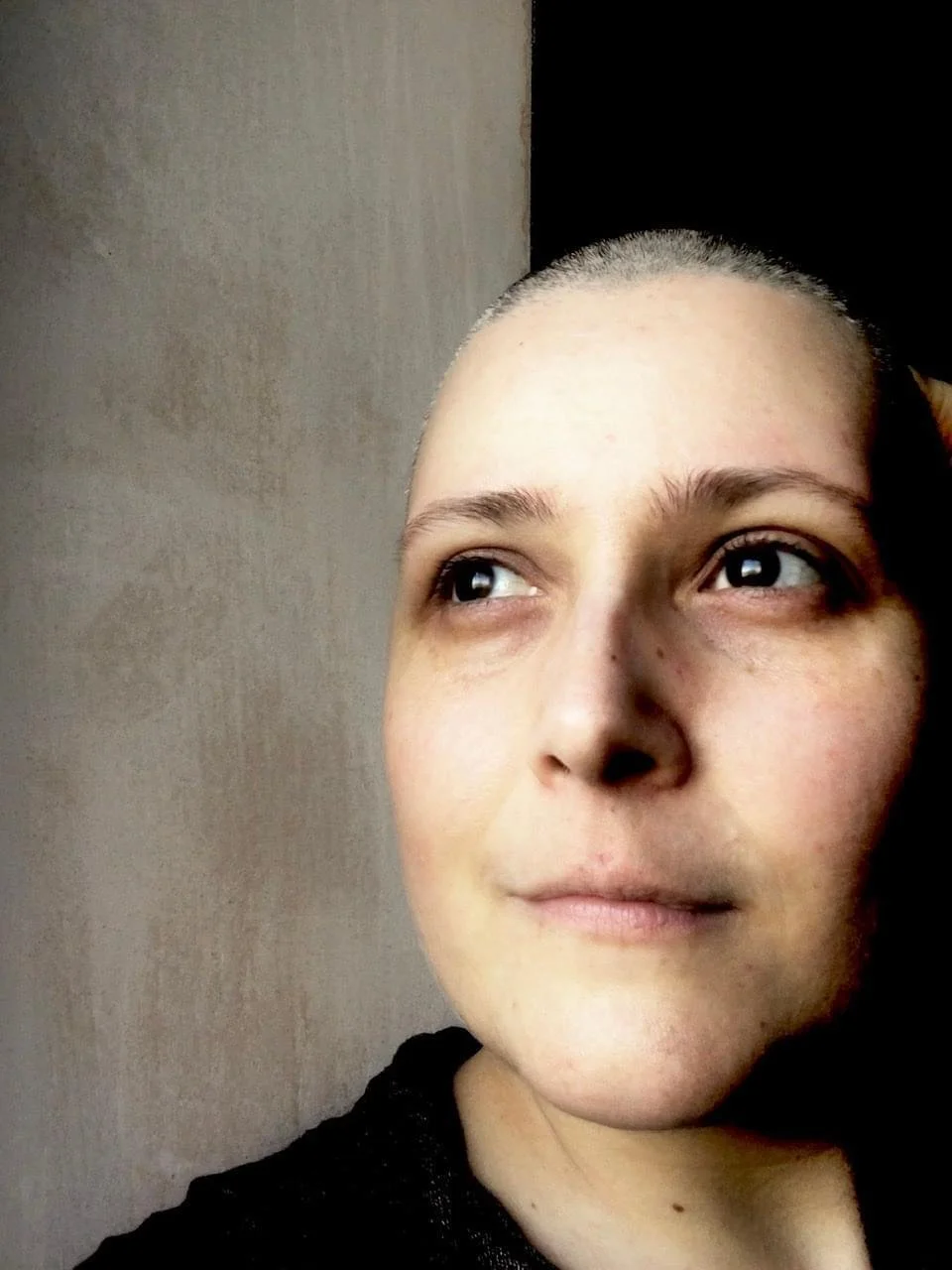
Marta Ardesi is an Italian activist, author, and a neurodivergent wellbeing advisor specialised in mental health and addictions.

Ross
Ross is a mental health advocate, wellness practitioner, and brand strategist, who’s worked with some of Europe’s leading mental health providers.